
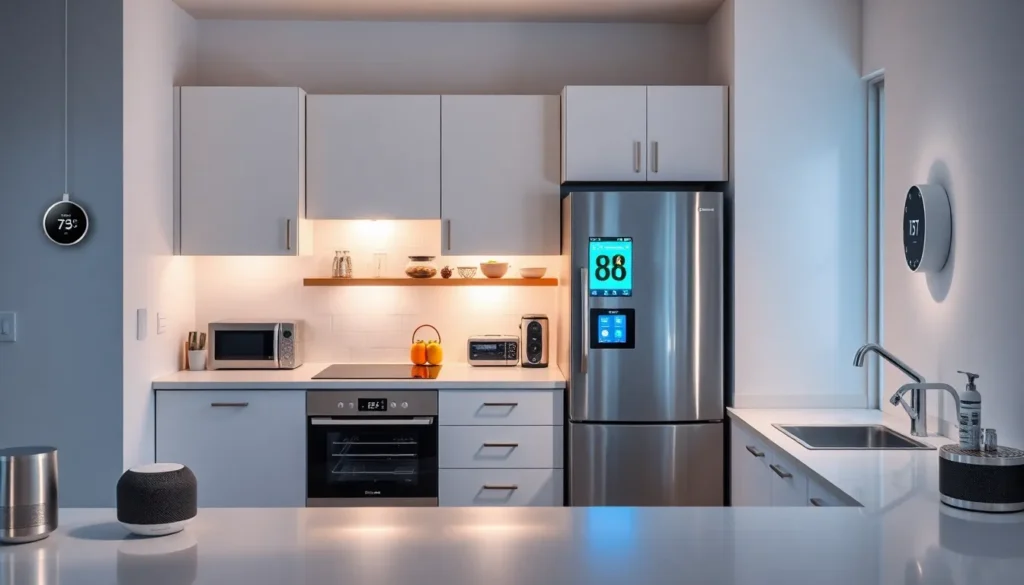
In a world where your fridge can text you when you’re out of milk, the Internet of Things (IoT) is more than just a buzzword—it’s a lifestyle. With an ever-growing number of devices vying for your attention, understanding IoT connectivity options is crucial. Whether it’s smart thermostats that learn your habits or wearable tech that tracks your every move, choosing the right connectivity method can make or break your smart home experience.
Overview Of IoT Connectivity Options
IoT connectivity options shape how devices interact within a smart environment. Cellular, Wi-Fi, Bluetooth, LoRaWAN, and Zigbee represent key technologies used in IoT deployments. Each option plays a distinct role depending on specific use cases.
Cellular connectivity offers robust coverage and reliable performance for devices on the go. It supports large-scale applications, making it suitable for smart vehicles and remote monitoring systems. Wi-Fi stands out for its high speed and wide data throughput, and it fits well in densely populated areas, particularly within homes and buildings.
Bluetooth operates efficiently for short-range connections, perfect for wearables and personal devices. It consumes less power, enhancing battery life for smaller gadgets. LoRaWAN supports long-range communications with low power consumption, making it ideal for smart agriculture and environmental monitoring. This technology allows devices to transmit data over several kilometers without the need for frequent battery changes.
Zigbee covers personal area networks while using low power, connecting devices like smart bulbs and sensors seamlessly. It excels in scenarios requiring many devices to communicate within a limited range.
Choosing the right connectivity option affects the performance and utility of IoT gadgets. Understanding the trade-offs and constraints associated with each technology can lead to improved smart home experiences. Prioritizing connectivity options based on factors such as range, power consumption, and bandwidth ensures effective integration in any IoT strategy.
Types Of IoT Connectivity Options
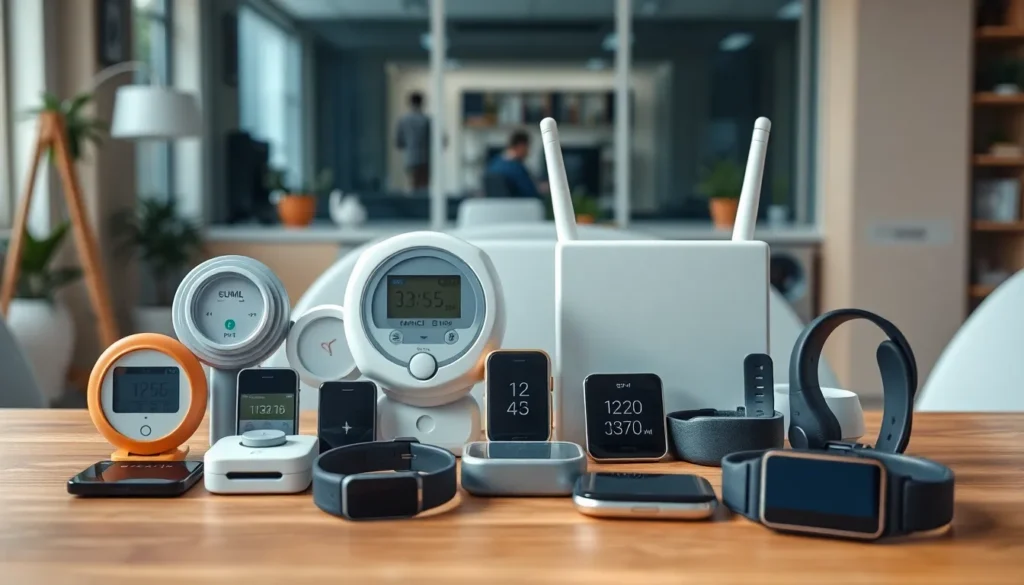
Understanding IoT connectivity options simplifies the selection process for optimizing smart devices. Each option plays a specific role, affecting performance, range, and power consumption.
Cellular Connectivity
Cellular connectivity offers extensive coverage, making it suitable for mobile IoT applications. This option utilizes existing cellular networks, enhancing accessibility across urban and rural areas. Data transmission occurs over 4G and 5G networks, providing high-speed connections. It’s ideal for devices requiring real-time data transfer, such as GPS trackers and smart vehicles. Cost considerations vary since data plans are often necessary for operation. Reliability serves as a significant advantage, ensuring continuous connectivity even in remote regions.
Wi-Fi Connectivity
Wi-Fi connectivity excels in high-density environments, delivering fast data rates for multiple devices. It connects smart home devices efficiently, allowing users to control them in real-time. Coverage ranges from small homes to large offices, depending on the network setup. Bandwidth remains a critical factor, supporting applications like video streaming and online gaming. Energy consumption may rise with constant use, but most devices handle this effectively and sustain functionality. Integration with existing home networks facilitates seamless user experiences.
LoRaWAN Connectivity
LoRaWAN connectivity specializes in long-range applications, particularly in smart agriculture and environmental monitoring. This low-power technology supports vast numbers of devices across considerable distances. Smart sensors, for instance, benefit from reduced energy demands while transmitting data infrequently. Network architecture ensures scalability, accommodating growth in IoT deployments. Reliability in various conditions significantly enhances its appeal for outdoor applications. Security features further protect data transmission, promoting safer, interconnected environments.
Bluetooth Connectivity
Bluetooth connectivity provides short-range communication, perfect for wearables and personal devices. Low-power operation extends battery life, making it suitable for health trackers and smartwatches. Simple pairing enhances user experience, fostering seamless interactions between devices. Data transfer rates meet the needs of various applications without sacrificing efficiency. Security protocols protect user data during transmission, ensuring safety. Scalability presents an advantage, accommodating additional devices in personal area networks effortlessly.
Zigbee Connectivity
Zigbee connectivity forms a reliable mesh network for connecting multiple devices within homes. Low power consumption enhances the life span of battery-operated devices like smart bulbs and sensors. Its range supports various smart home applications, ensuring devices communicate effectively. The protocol effectively manages device interoperability, creating a cohesive network. Security standards further safeguard information exchange among devices. Zigbee’s cost-effectiveness and versatility appeal to developers seeking robust connectivity for IoT solutions.
Factors To Consider For Choosing IoT Connectivity
Choosing the right IoT connectivity option involves evaluating several critical factors. Each factor plays a pivotal role in ensuring optimal performance and user experience across various devices.
Range And Coverage
Range and coverage significantly influence connectivity choices. Cellular networks provide extensive coverage, ideal for applications requiring mobility. In contrast, Wi-Fi suits indoor environments, especially where multiple devices connect over shorter distances. LoRaWAN has a unique advantage with its long-range capabilities, making it suitable for smart agriculture and remote monitoring. Zigbee also offers decent range, effectively forming mesh networks that enhance communication across devices within a home. Ensuring that the selected connectivity type meets specific range requirements is essential for reliable IoT performance.
Data Transfer Speed
Data transfer speed is crucial for applications relying on real-time data. Cellular connectivity often delivers high-speed data, suitable for applications like GPS tracking. Wi-Fi matches this speed, making it a top choice for high-density environments with multiple connected devices. Bluetooth, while slower in comparison, excels in short-range scenarios, benefiting low-bandwidth applications such as wearables. LoRaWAN prioritizes long-range, low-bandwidth communication, which suits applications with infrequent data updates. Selecting a connectivity option with optimal data transfer speed ensures that real-time data handling remains seamless.
Power Consumption
Power consumption impacts device longevity and operational efficiency. Bluetooth shines in this area, offering low power requirements suitable for battery-operated devices. Zigbee maintains low energy consumption, facilitating extended battery life for smart home devices. In contrast, cellular connectivity typically requires more power due to constant signal maintenance, though advancements are improving efficiency. Wi-Fi’s power consumption can also be significant, especially in high-traffic environments. Evaluating power consumption helps maximize the lifespan and performance of IoT devices, enabling user satisfaction.
Cost Considerations
Cost considerations are paramount when selecting IoT connectivity options. Cellular subscriptions can incur recurring expenses, especially for devices requiring mobility. Wi-Fi installations can involve upfront costs, but they may offset long-term operational costs for high-traffic networks. Bluetooth and Zigbee present lower costs for small-scale devices, fostering affordable smart home solutions. LoRaWAN may incur initial setup costs for gateways but can prove economical for widespread, low-power deployments. Understanding the full cost implications allows for informed decision-making for sustainable IoT strategies.
Future Trends In IoT Connectivity
Advancements in IoT connectivity shape the future landscape of smart technology. Several emerging technologies promise to enhance connectivity options for IoT applications.
Emerging Technologies
5G connectivity offers significant improvements over previous cellular standards. This technology supports higher data rates, reduced latency, and increased device density. Low Earth Orbit (LEO) satellites expand global IoT connectivity, even in remote locations. Edge computing reduces reliance on cloud servers by processing data closer to where it’s generated, improving response times. Additionally, the integration of artificial intelligence (AI) in managing IoT networks increases efficiency and adaptability, allowing for real-time decision-making across various applications.
Potential Challenges
Security vulnerabilities continue to pose a major threat to IoT deployments. Each connected device represents a potential entry point for cyberattacks, demanding robust security measures. Interoperability issues arise from diverse standards and protocols. These challenges complicate the integration of multiple devices in a cohesive system. Furthermore, scalability remains a concern as businesses expand their IoT ecosystems. Managing a growing number of connected devices can create strain on existing infrastructure if not planned and executed properly.
Choosing the right IoT connectivity option is vital for maximizing the performance of smart devices. Each option has its unique strengths tailored to specific needs and environments. Understanding these differences empowers users to make informed decisions that enhance their smart home experience.
As technology evolves, staying updated on emerging trends like 5G and edge computing will further refine connectivity strategies. Addressing challenges such as security and interoperability will be crucial for successful IoT integration. By prioritizing the right connectivity solutions, individuals and businesses can fully harness the benefits of IoT in their daily lives.

