

Imagine a world where your coffee maker knows just how strong you like your brew and your thermostat adjusts to your preferred temperature before you even step through the door. Welcome to the realm of Wireless IoT, where everyday objects are getting a major upgrade. No longer confined to the realm of sci-fi, the Internet of Things is transforming the mundane into the extraordinary, one wireless connection at a time.
As devices become smarter and more interconnected, the potential for innovation is limitless. From smart homes to wearable tech, Wireless IoT is revolutionizing how we live, work, and play. It’s like giving your gadgets a personality—one that’s eager to make life easier and a bit more fun. So buckle up and get ready to explore the fascinating world of Wireless IoT, where technology meets convenience in the most delightful ways.
Overview of Wireless IoT
Wireless IoT refers to a network of interconnected devices that communicate through wireless signals. Everyday objects, such as appliances and wearable technologies, connect seamlessly to the internet, creating smarter environments. This interconnectedness allows for real-time data collection and communication between devices.
Notable examples of Wireless IoT include smart home systems that enable users to control lighting and thermostat settings remotely. These systems utilize various protocols, such as Wi-Fi, Bluetooth, and Zigbee, ensuring reliable communication across devices. Benefits include increased energy efficiency, improved security, and enhanced convenience in daily activities.
Furthermore, industries leverage Wireless IoT to optimize operations. For instance, agriculture utilizes sensors and drones for precision farming, monitoring soil moisture and crop health. Smart cities benefit from connected infrastructure, which enhances traffic management and waste disposal.
Security remains a crucial consideration. Vulnerabilities in connected devices can lead to unauthorized access and data breaches. Implementing robust encryption and security protocols protects user data and device integrity.
Additionally, the scalability of Wireless IoT supports numerous devices and applications. As technology advances, the integration of Artificial Intelligence and machine learning will further elevate the capabilities of Wireless IoT. Collectively, these advancements shape the future landscape, where interconnected systems streamline daily life and enhance productivity across various sectors.
Key Technologies Behind Wireless IoT
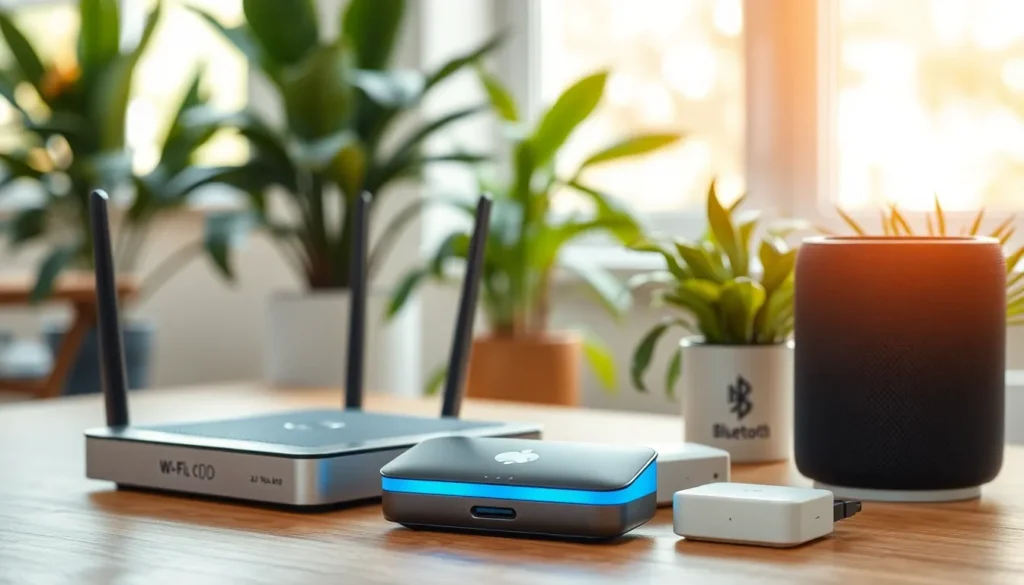
Wireless IoT relies on several key technologies that enable seamless communication and interaction among devices. The importance of these technologies lies in their ability to foster connectivity and improve efficiency.
Wireless Communication Protocols
Wireless communication protocols form the backbone of Wireless IoT networks. Wi-Fi, Bluetooth, and Zigbee stand out as popular choices for different applications. Each protocol serves distinct purposes, with Wi-Fi supporting high data rates for devices like cameras and Bluetooth enabling quick connections for wearable technology. Zigbee offers low-power, low-data rate solutions for smart home devices, enhancing battery life. The selection of a suitable protocol impacts the overall efficiency and effectiveness of IoT implementations.
Sensors and Actuators
Sensors and actuators play vital roles in the functionality of Wireless IoT systems. Sensors collect data from the environment, measuring variables like temperature, humidity, and light levels. Actuators, on the other hand, respond to commands by performing physical actions, such as opening a valve or adjusting a thermostat. Combining these components enhances the interactivity of devices, enabling automation and smart responses to real-time conditions. Together, sensors and actuators help create intelligent environments that adapt to users’ needs and preferences.
Applications of Wireless IoT
Wireless IoT applications span various sectors, enhancing functionality and efficiency. Notable areas include smart homes and industrial automation.
Smart Homes
Smart homes illustrate the convenience of Wireless IoT technology. Devices like smart thermostats and lighting systems connect seamlessly, allowing users to control home environments remotely. Integration simplifies daily routines; users can adjust settings from smartphones, voice commands, or scheduled automation. Security systems benefit significantly, utilizing IoT sensors for real-time monitoring and alerts. Additionally, energy management lowers costs as smart appliances optimize usage patterns. In effectively enabling personalized living spaces, Wireless IoT enhances comfort and security for homeowners.
Industrial Automation
Industrial automation leverages Wireless IoT to transform manufacturing processes. Connected machinery enables real-time monitoring and analytics, improving operational efficiency. Sensors track performance metrics, facilitating predictive maintenance and minimizing downtime. Workflow optimization arises from automated inventory management and supply chain visibility. Asset tracking reliability ensures resources are effectively utilized across production lines. Safety improvements occur through remote monitoring systems that prevent workplace hazards. Collectively, these advancements position industries to maximize productivity while reducing costs.
Benefits of Wireless IoT
Wireless IoT offers significant benefits across various sectors, enhancing efficiency and convenience in everyday life.
Scalability
Scalability stands out as a primary advantage of Wireless IoT. Systems can accommodate numerous devices, adapting to increased demands without compromising performance. Numerous industries, including healthcare and agriculture, can scale their operations seamlessly by integrating new devices and applications. Flexible infrastructure supports easy updates and expansions, enabling organizations to tailor their IoT networks to specific needs. With ongoing technological advancements, scalable solutions facilitate growth and innovation.
Cost-Effectiveness
Cost-effectiveness remains a crucial benefit of Wireless IoT. By automating processes and minimizing manual interventions, organizations can achieve substantial savings on operational costs. Remote monitoring reduces the need for on-site inspections, allowing companies to allocate resources more efficiently. Implementing Wireless IoT leads to reduced energy consumption through smart resource management. Enhanced data analytics aid in informed decision-making, further optimizing financial performance. Investing in Wireless IoT not only elevates efficiency but also delivers long-term returns.
Challenges in Wireless IoT
Wireless IoT faces several challenges that can impact its efficacy and adoption.
Security Concerns
Security concerns significantly affect Wireless IoT implementation. Vulnerabilities in connected devices often lead to unauthorized access and data breaches. High-profile incidents, such as the Mirai botnet attack, illustrate the risks associated with weak security measures. End-to-end encryption and strong authentication protocols must become priorities to safeguard user data. Regular software updates play a critical role in addressing newly discovered vulnerabilities. Organizations need to cultivate a security-first mindset when integrating Wireless IoT solutions.
Connectivity Issues
Connectivity issues pose challenges for Wireless IoT networks. Irregular signal strength can disrupt communication between devices, causing delays and inefficiencies. Various environmental factors, such as physical obstructions and interference from other devices, contribute to connectivity problems. Different wireless protocols, including Wi-Fi and Zigbee, come with unique range limitations that further complicate reliable communication. Robust network infrastructure is essential to mitigate these challenges. Utilizing mesh networking techniques can enhance connectivity by allowing devices to relay signals, ensuring consistent communication within IoT ecosystems.
Wireless IoT is reshaping how individuals and industries interact with technology. As devices become more interconnected, they offer unprecedented convenience and efficiency. The potential for innovation is vast, with applications spanning smart homes to industrial automation.
While challenges like security and connectivity remain, the benefits far outweigh the risks. With the right protocols and infrastructure in place, users can enjoy a seamless experience that adapts to their needs. The future of Wireless IoT looks promising, paving the way for smarter living and optimized operations across various sectors. Embracing this technology will undoubtedly lead to a more connected and efficient world.

