

In a world where your toaster could potentially send you a text, IoT data protocols are the unsung heroes making it all happen. These protocols are like the secret sauce in a recipe—without them, your smart devices would just sit there, looking pretty and utterly clueless. Understanding these protocols isn’t just for tech geeks; it’s for anyone who’s ever wondered how their fridge knows when it’s time to order more milk.
Overview of IoT Data Protocols
IoT data protocols serve as the communication standards that enable devices to interact seamlessly. These protocols help various IoT devices share information, ensuring efficient operation across different platforms. Numerous protocols exist, each designed to address specific communication needs.
One popular protocol, MQTT (Message Queuing Telemetry Transport), offers a lightweight messaging system ideal for low-bandwidth applications. This protocol excels in scenarios requiring minimal power consumption, making it suitable for devices like smart sensors.
Another key protocol, CoAP (Constrained Application Protocol), is tailored for resource-constrained devices. CoAP offers a simple request/response interaction model, highly efficient for small and low-power IoT devices. Many manufacturers leverage this protocol for applications like home automation and smart lighting systems.
HTTP (Hypertext Transfer Protocol) remains commonly utilized due to its familiarity and versatility. While not specifically designed for IoT, HTTP supports the integration of IoT devices with existing web technologies. Its widespread use facilitates interactions between user interfaces and smart devices, enhancing user experience.
Furthermore, AMQP (Advanced Message Queuing Protocol) provides a robust messaging framework suitable for enterprise-level applications. Security and reliability define this protocol, making it ideal for large-scale IoT ecosystems handling sensitive data.
Each protocol has unique advantages that cater to different applications and environments. Users benefit from understanding these protocols, as they contribute to the smooth functioning of smart devices in daily life. Knowing how these protocols operate illuminates their crucial role in managing tasks within IoT systems.
Common Types of IoT Data Protocols
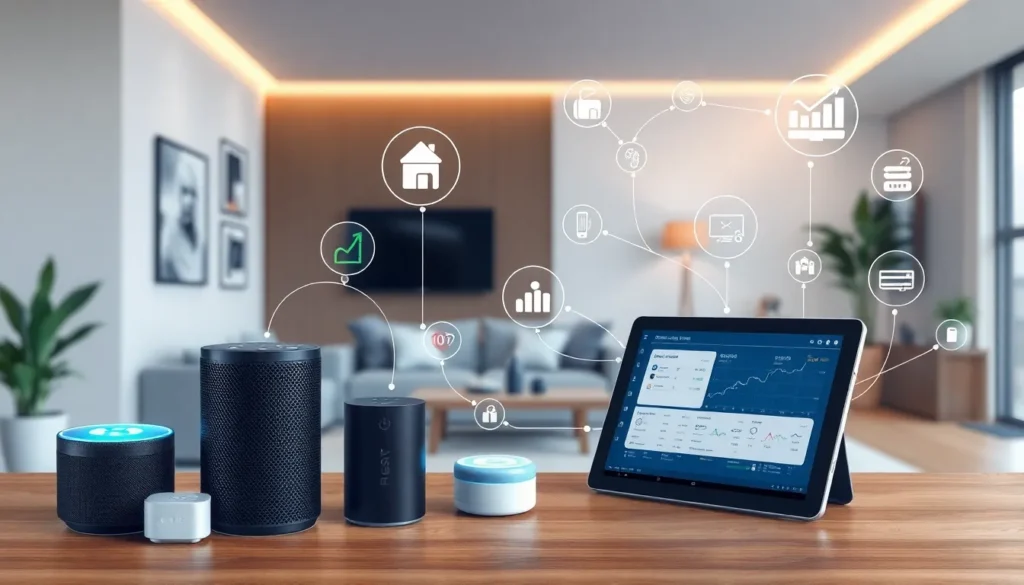
In the realm of IoT data protocols, understanding specific types enhances the functionality and efficiency of smart devices. Various protocols cater to distinct needs, each offering unique attributes.
MQTT
MQTT, or Message Queuing Telemetry Transport, excels in low-bandwidth environments. This protocol uses a publish-subscribe model, allowing devices to send and receive messages efficiently. Ideal for applications requiring minimal power, MQTT supports many connected devices simultaneously. Users appreciate its lightweight nature and reduced overhead, making it perfect for home automation and remote sensor management. Notably, MQTT operates over TCP/IP, ensuring reliable message delivery.
CoAP
CoAP stands for Constrained Application Protocol, specifically engineered for resource-constrained devices. This protocol utilizes a request-response model similar to HTTP, tailored for low-power applications. CoAP allows devices to communicate via simple, lightweight messages, which is essential in smart homes and IoT networks. It supports multicast communication, enhancing efficiency for multiple devices. As a result, device manufacturers increasingly adopt CoAP to facilitate easy integration into constrained environments.
HTTP/HTTPS
HTTP and HTTPS, while not exclusively for IoT, play a significant role in device communication. These protocols utilize a request-response structure, facilitating integration with web technologies. HTTPS, offering secure communication through encryption, enhances data privacy and integrity. Many IoT devices utilize HTTP/HTTPS for cloud connectivity, enabling them to share data with servers. This widespread adoption highlights its relevance in modern smart applications, particularly in those requiring robust security measures.
Advantages of IoT Data Protocols
IoT data protocols offer significant benefits that enhance communication and device interaction. Reduced bandwidth consumption stands out as a primary advantage, particularly with protocols like MQTT. This efficiency proves vital in environments with limited connectivity, ensuring reliable data transmission.
Increased security is another key benefit. Protocols such as AMQP incorporate robust security measures, making them ideal for enterprise applications where sensitive data protection is crucial. Smart home devices also leverage secure protocols, ensuring user data remains private and resistant to cyber threats.
Moreover, interoperability enhances the usability of various devices. CoAP facilitates communication between diverse systems, allowing different smart devices to work seamlessly together in a home automation setup. This compatibility reduces integration issues and ensures a smoother user experience.
Scalability becomes increasingly important as the number of connected devices grows. Protocols designed for IoT, like MQTT and CoAP, support large networks without sacrificing performance. Such scalability enables businesses and individuals to expand their smart technology ecosystems as needed.
Low power consumption significantly benefits battery-operated devices as well. MQTT, specifically engineered for minimal power use, supports remote sensor management while prolonging battery life. This aspect is particularly beneficial for wearables and other devices that require efficient energy use.
Real-time data transfer represents yet another advantage of IoT protocols. Many protocols allow for instantaneous updates, enabling users to receive timely information from their devices. This feature enhances automation capabilities and supports applications in sectors like healthcare and industrial monitoring.
Overall, the advantages of IoT data protocols contribute to their essential role in modern smart technology deployment.
Challenges and Limitations
IoT data protocols face several challenges and limitations that impact their effectiveness and implementation. Scalability issues arise as the number of connected devices increases. Many protocols struggle to maintain performance with thousands of devices communicating concurrently.
Security concerns are prevalent in IoT environments. Weak authentication measures or inadequate encryption can expose sensitive data. MQTT, while efficient, does not provide significant security features by default. Additional layers of protection are necessary to mitigate these risks.
Interoperability between diverse devices presents another challenge. Protocols like HTTP and MQTT can support limited device integrations, causing friction among manufacturers. Ensuring smooth communication requires adherence to common standards.
Latency can also affect real-time data transmission. Some protocols, such as CoAP, are designed for quick communication but may still experience delays under certain conditions. Factors like network congestion or outdated hardware can exacerbate these issues.
Power consumption plays a critical role, especially in battery-operated devices. While protocols like MQTT are designed for low power usage, the overall energy requirements can still be significant for certain applications. Finding a balance between low energy consumption and high performance is key.
Environmental factors may limit the deployment of IoT protocols. For example, Wi-Fi coverage in remote areas may be inconsistent, affecting device communication. In such cases, protocols that function well in low-bandwidth situations, like MQTT, become more valuable.
Understanding these challenges helps stakeholders make informed decisions when selecting IoT data protocols. Awareness of limitations can lead to better strategies for implementing and managing smart devices in various environments.
Future Trends in IoT Data Protocols
Emerging trends in IoT data protocols reflect the rapid evolution of technology. Increased demand for real-time data processing shapes protocol development. Protocols are focusing on interoperability standards to facilitate seamless communication between diverse devices. Enhanced security protocols are increasingly prioritized to address rising cybersecurity concerns.
Artificial intelligence integration is altering how devices interact, driving the creation of smarter protocols. Improvements in bandwidth efficiency aim to support the growing number of connected devices. Enhanced protocols are catering to more complex applications, such as smart cities and industrial IoT, which require high reliability and scalability.
Edge computing is gaining traction, pushing data processing closer to the source. This shift enables faster response times and reduces latency in IoT applications. Many organizations are adapting their protocols to leverage this technology, ensuring efficient data handling.
Sustainability remains a critical consideration, with an emphasis on developing low-power protocols that extend device battery life. Collaboration among industry leaders aims to establish universally accepted standards that promote growth and innovation. Open-source protocols are becoming more common, allowing for greater flexibility and customization based on specific needs.
Emerging protocols are expected to feature enhanced machine-to-machine communication capabilities. This advancement facilitates more complex interactions and decisions within interconnected ecosystems. As innovation accelerates, industry stakeholders must stay informed about these trends and adapt their strategies accordingly.
The landscape of IoT data protocols is continually evolving as technology advances. Stakeholders must recognize the critical role these protocols play in enhancing device communication and functionality. With the growing number of connected devices, understanding the strengths and limitations of each protocol is essential for effective implementation.
As trends shift towards improved security measures and real-time data processing, the future promises even greater innovation in IoT communication standards. By staying informed and adapting strategies to leverage these developments, users and developers alike can maximize the potential of smart technology in everyday life.

