

In today’s fast-paced world, industrial equipment is getting a major upgrade, and it’s all thanks to the Internet of Things (IoT). Picture this: machines that not only work hard but also talk to each other like old pals at a coffee shop. That’s right! IoT is transforming the way industries operate, making them smarter, more efficient, and surprisingly chatty.
Overview of IoT Industrial Equipment
IoT industrial equipment includes a wide range of devices equipped with sensors and connectivity features. These devices collect and exchange data seamlessly, enhancing operational efficiency in various sectors. Companies leverage IoT technology to monitor machinery performance in real-time, allowing for proactive maintenance and minimizing downtime.
Smart sensors play a critical role in this setup. They enable the tracking of temperature, vibrations, and pressure levels, providing valuable insights. Data collected by these sensors can predict potential failures, leading companies to schedule maintenance before issues escalate.
IoT platforms integrate data from numerous devices, creating a centralized system. This integration supports advanced analytics that improve decision-making processes. For instance, businesses can analyze patterns and trends, optimizing their production schedules and resource allocations.
Remote monitoring options are available with IoT industrial equipment. Operators can access real-time data from their smartphones or computers, ensuring timely responses to operational issues. This functionality enhances overall productivity and safety in industrial environments.
Industry 4.0 heavily relies on IoT advancements. In this new era of manufacturing, automation and data exchange lead to smarter factories. As organizations adopt more IoT devices, they witness improvements in productivity, cost reduction, and effectiveness.
Overall, IoT industrial equipment represents a significant evolution in manufacturing practices. Embracing this technology enables organizations to stay competitive and meet the demands of a rapidly changing market environment.
Key Technologies in IoT Industrial Equipment
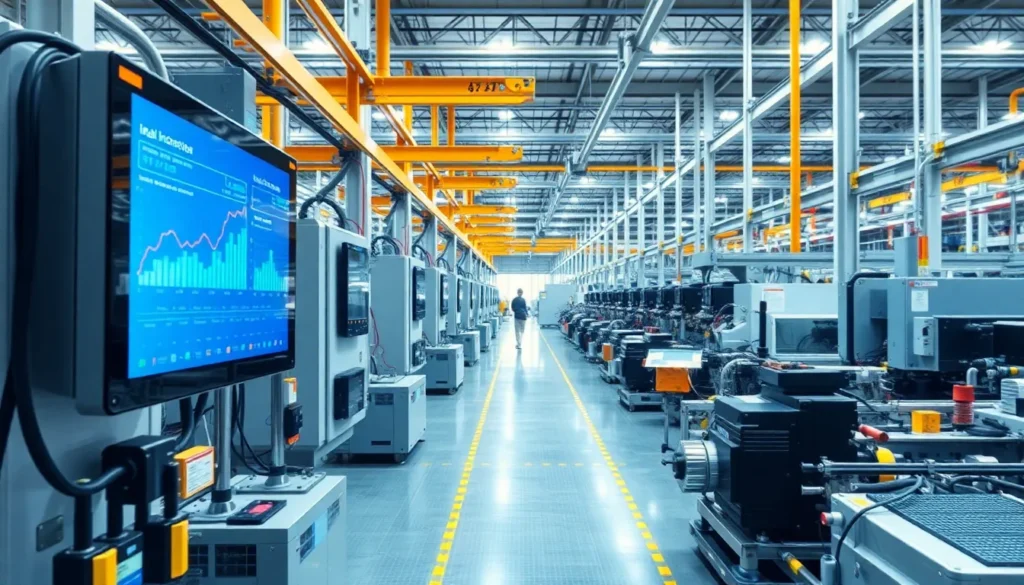
IoT industrial equipment relies on several key technologies that enhance operational efficiency and facilitate smarter processes in various industries.
Sensors and Actuators
Smart sensors monitor critical parameters such as temperature, pressure, and vibrations. They capture real-time data to identify potential issues before they escalate into failures. Actuators respond to signals by initiating actions, like adjusting valve positions or controlling machinery speed. These integrated devices improve the accuracy of monitoring and help maintain optimal performance levels. Together, sensors and actuators form a vital system that enables predictive maintenance, reducing downtime and increasing productivity.
Connectivity Solutions
Connectivity solutions provide the backbone for IoT industrial equipment. Various protocols, including Wi-Fi, Bluetooth, and LPWAN, connect devices, allowing seamless communication across networks. Cloud platforms enable data storage and processing, powering advanced analytics that inform decision-making. While wireless options offer flexibility, wired connections ensure reliability in critical operations. Each solution must match specific industrial needs to optimize performance and achieve efficient data exchange. Such connections leverage IoT’s potential, transforming operational capabilities across industries.
Benefits of IoT Industrial Equipment
IoT industrial equipment provides numerous advantages that transform production and operational practices. These benefits include improved efficiency and enhanced data analytics.
Improved Efficiency
Increased automation reduces human intervention in industrial processes. Sensors continuously monitor machinery, allowing for real-time adjustments. Proactive maintenance diminishes unplanned downtime, which boosts productivity. Enhanced resource allocation ensures optimal use of materials and energy. Communication between devices leads to synchronized operations, cutting down on delays. Companies benefit from streamlined workflows, which translate to cost savings and better output.
Enhanced Data Analytics
Data collection enhances decision-making capabilities across industries. Real-time insights allow managers to identify trends and optimize processes immediately. Advanced analytics applied to historical data can uncover patterns that inform future strategies. Visual dashboards present information clearly, making it easier to interpret data for swift actions. Predictive maintenance analytics prevent machinery failures before they occur, ensuring uninterrupted operation. Overall, improved analytics foster a culture of continuous improvement, driving competitive advantage in rapidly evolving markets.
Challenges in Implementing IoT Industrial Equipment
Implementing IoT industrial equipment presents several challenges that organizations must address.
Security Concerns
Security emerges as a primary challenge in IoT implementations. Sensors and devices often connect to the internet, creating potential vulnerabilities. Notably, a breach can lead to unauthorized access to sensitive data and operational disruptions. Companies must invest in robust cybersecurity measures to protect their networks and data. For instance, employing encryption protocols and regular software updates mitigates risks effectively. In addition, establishing comprehensive security policies helps create a secure ecosystem for connected devices. Organizations must prioritize employee training on security best practices to enhance overall safety.
Integration Issues
Integration issues frequently hinder the seamless deployment of IoT equipment. Diverse systems often operate with different protocols and standards, complicating interoperability. Achieving seamless communication between legacy equipment and new IoT devices demands careful planning and technical expertise. An example involves ensuring compatibility between existing software platforms and new IoT applications. Companies may face challenges in standardizing data formats, which can lead to data silos. Moreover, engaging skilled IT professionals is vital to facilitate a smooth integration process. It’s essential to implement a phased approach to minimize disruptions during the transition.
Case Studies of IoT Industrial Equipment in Action
Organizations across various industries have showcased the effectiveness of IoT industrial equipment. One notable example involves a manufacturing company that improved machine efficiency by 20% through the implementation of smart sensors. These sensors monitored critical parameters, such as temperature and vibration, allowing for timely maintenance interventions.
Another case study revolves around a logistics firm that integrated IoT devices for real-time tracking of its fleet. Successful monitoring resulted in reduced delivery times and enhanced inventory management. Data gathered from the IoT-enabled system allowed for accurate forecasting and improved planning.
In the energy sector, a utility provider deployed IoT solutions to optimize equipment monitoring. Implementation of connected devices provided insights into energy consumption patterns, leading to a 15% reduction in operational costs. Operators accessed data remotely, enabling prompt decision-making and resource allocation.
A pharmaceutical manufacturer utilized IoT technology to ensure quality control of its production process. By employing IoT sensors, they achieved precise temperature regulation in storage facilities, which minimized product spoilage. This initiative enhanced compliance with regulatory standards and improved overall product quality.
Lastly, an automotive company adopted IoT-enabled actuators in assembly lines, enhancing precision and reducing manual errors. The automated adjustments streamlined operations, resulting in increased production rates and improved product consistency.
These case studies illustrate the transformative impact of IoT industrial equipment across sectors. By leveraging real-time data and connectivity, companies achieve significant operational improvements, paving the way for smart manufacturing practices.
Future Trends in IoT Industrial Equipment
Emerging technologies will shape the landscape of IoT industrial equipment significantly. Advances in artificial intelligence (AI) and machine learning (ML) will drive predictive analytics, enhancing maintenance protocols. These technologies can analyze vast amounts of data rapidly, identifying patterns that lead to early failure detection.
Enhanced connectivity options will transform how devices interact, with 5G networks set to provide ultra-reliable low-latency communication. Such advancements allow for real-time data transmission, fostering seamless integration and process efficiency. Businesses will also benefit from edge computing, where data processing occurs closer to the source, reducing latency and bandwidth use.
Adoption of digital twins will gain momentum, enabling companies to create virtual replicas of physical assets. This approach supports real-time monitoring and simulation, helping organizations optimize operations and conduct what-if analyses. Such virtual environments grant companies the ability to refine production processes without physical disruptions.
Sustainability initiatives will play a pivotal role in future IoT applications. By employing smart sensors and analytics, industries can monitor resource usage, reducing waste and improving energy efficiency. Companies increasingly pursue circular economy principles, utilizing IoT data to extend the lifecycle of products and materials.
Lastly, cybersecurity measures will evolve in tandem with IoT advancements. As organizations increase their reliance on connected devices, stronger protocols will safeguard against potential threats. Continuous investment in security technology will be essential, emphasizing a proactive approach to protect sensitive data from emerging risks.
The integration of IoT industrial equipment is reshaping how industries operate. By leveraging real-time data and advanced analytics, companies can enhance efficiency and reduce downtime. As organizations embrace these technologies, they not only improve productivity but also drive innovation within their operations.
However, the journey isn’t without challenges. Addressing security concerns and ensuring interoperability between systems are crucial for successful implementation. With the right strategies and investments in cybersecurity, companies can navigate these hurdles effectively.
Looking forward, the future of IoT in industrial settings promises even greater advancements. As technologies like AI and 5G evolve, they will further enhance connectivity and operational capabilities. Adopting IoT solutions is no longer optional; it’s essential for staying competitive in a dynamic market.

